 |
|
| Home | Town | History | People | Events |
| Media | Schools | Government | Links | Back to Town |
| The Origin of the Town Name | The
Matewan Floodwall |
Local Merchants |
A
Brief Look at Matewan |
Shopping for Souvenirs |
| Business Opportunities | The
Visitors Center |
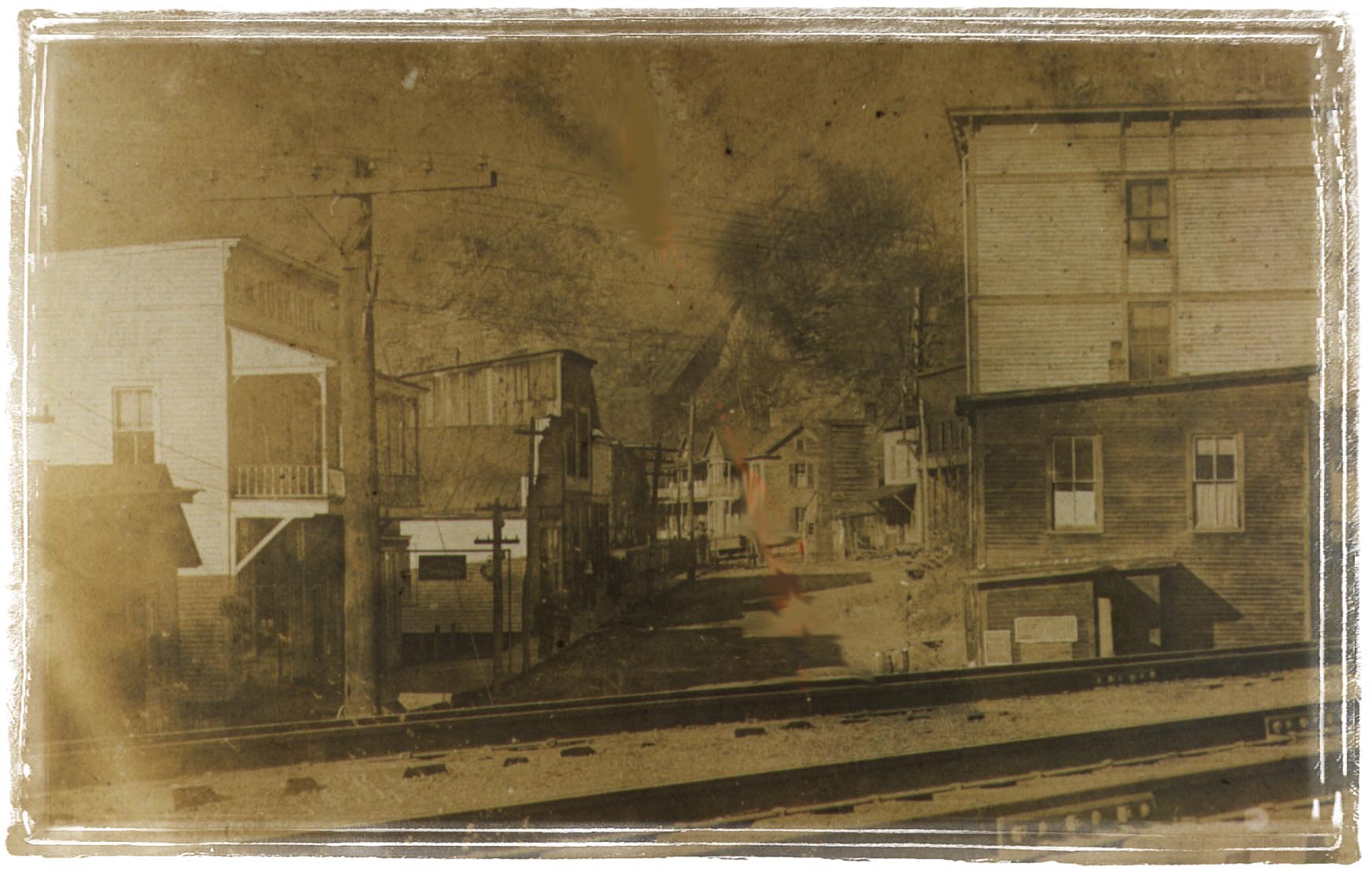 The
Matewan area, located on the Tug Fork of the Big Sandy River in Mingo County,
West Virginia, is referred to as "a peaceful place with a violent history."
Its topography consisting of sharply rising mountains rearing up from twisting
creeks and narrow valleys existed for generations as a region apart from
the industrialized east coast, isolated physically and culturally by the
impenetrable terrain. The Tug Valley remained largely unchanged until the
Industrial Revolution demanded coal to fuel the nations industries. Matewan
was founded in 1895 when the Norfolk and Western Railway entered the valley
to open the Williamson Coalfield. As a stop on the N&W's main line,
the town supplied goods to the surrounding mining communities. Miners,
railroad workers and locals caroused and gambled in Matewan's saloons.
The influx of outsiders and exploitation of the resources dramatically
changed the physical and socioeconomic makeup of the region. Today, these
regions of Appalachia have been described as "rich yet poor, exploited
yet underdeveloped, scarred yet beautiful."
The
Matewan area, located on the Tug Fork of the Big Sandy River in Mingo County,
West Virginia, is referred to as "a peaceful place with a violent history."
Its topography consisting of sharply rising mountains rearing up from twisting
creeks and narrow valleys existed for generations as a region apart from
the industrialized east coast, isolated physically and culturally by the
impenetrable terrain. The Tug Valley remained largely unchanged until the
Industrial Revolution demanded coal to fuel the nations industries. Matewan
was founded in 1895 when the Norfolk and Western Railway entered the valley
to open the Williamson Coalfield. As a stop on the N&W's main line,
the town supplied goods to the surrounding mining communities. Miners,
railroad workers and locals caroused and gambled in Matewan's saloons.
The influx of outsiders and exploitation of the resources dramatically
changed the physical and socioeconomic makeup of the region. Today, these
regions of Appalachia have been described as "rich yet poor, exploited
yet underdeveloped, scarred yet beautiful."
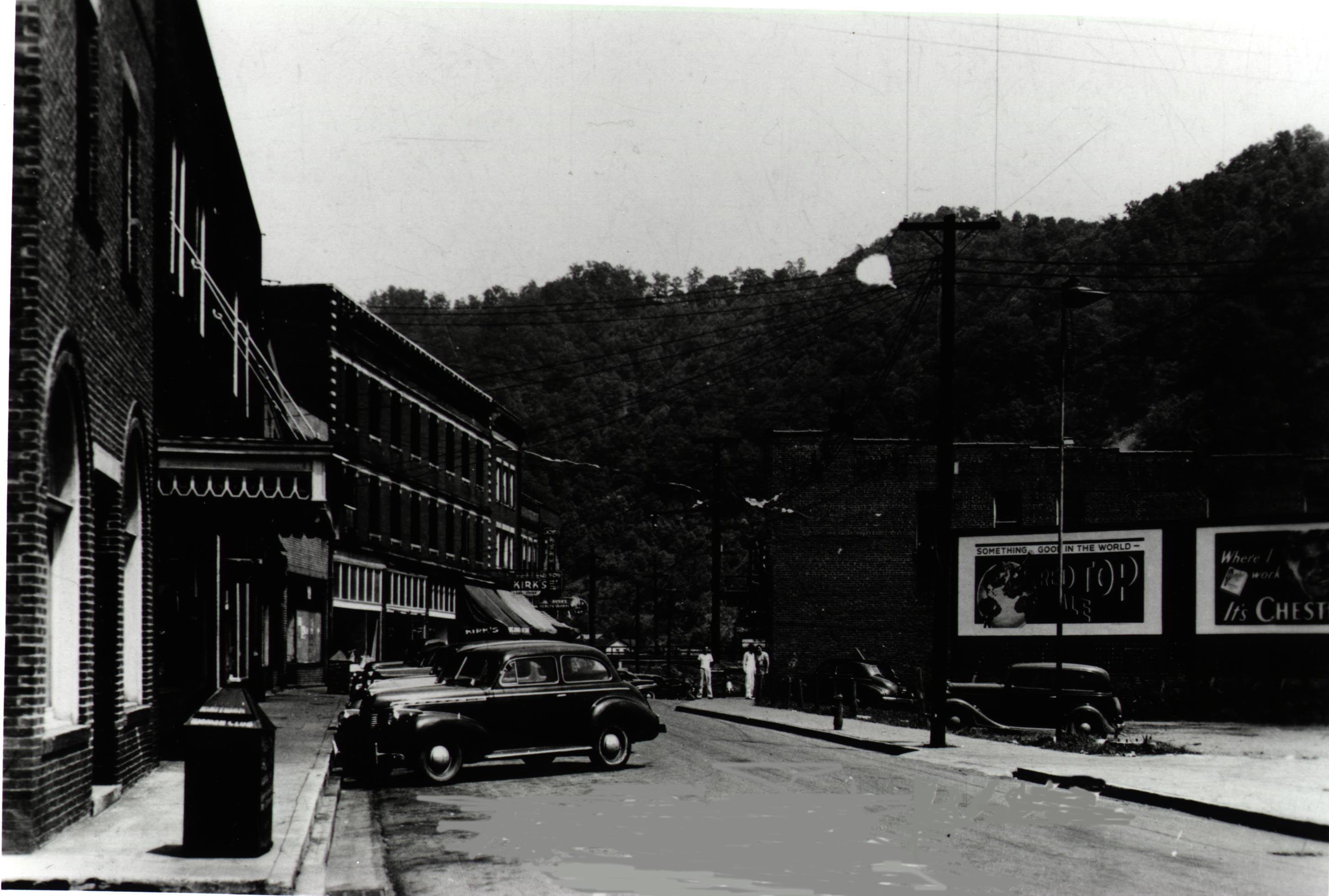 Matewan
has nurtured a distinctive folklore and has intrigued visitors over the
past century. In the 1880s, the feud between the Hatfields and McCoy's raged
near Matewan. Forty years later, the town was the scene of the "Battle
of Matewan," a bloody conflict in the West Virginia Coal Mine Wars. Historical
events, the rugged terrain, and it's people have shaped the unique contemporary
character of the Matewan area.
Matewan
has nurtured a distinctive folklore and has intrigued visitors over the
past century. In the 1880s, the feud between the Hatfields and McCoy's raged
near Matewan. Forty years later, the town was the scene of the "Battle
of Matewan," a bloody conflict in the West Virginia Coal Mine Wars. Historical
events, the rugged terrain, and it's people have shaped the unique contemporary
character of the Matewan area.
Times are changing in the Tug Valley. The area faces a major transformation in the new Millennium. The periodic flooding which has caused social havoc and stymied economic growth throughout the valley has prompted the U.S. Army Corps of Engineers by Congressional mandate to undertake extensive flood protection programs such as the newly completed floodwall that surrounds the town. Coal mining has re-emerged in the late 1980s as a major economic force within the Matewan area; the forthcoming completion of Appalachian Corridor "G" will link the area to the Interstate Highway System; and, scholars and artists are returning their focus on the attention of wealth of history associated with Matewan, as demonstrated by the release of the movie, "MATEWAN" in 1987 by filmmaker John Sayles, and the recent publication of the books Storming Heaven, by Denise Giardinal; Thunder in the Mountains, by Lon Savage; and FEUD, by Altina Waller. These events have served as a catalyst for a series of revitalization efforts in the Matewan area.
| Home | Town | History | People | Events |
| Media | Schools | Government | Links | Back to Town |
Back to matewan.com
matewan@a-aautoparts.com